97.2%
Sodium Chloride
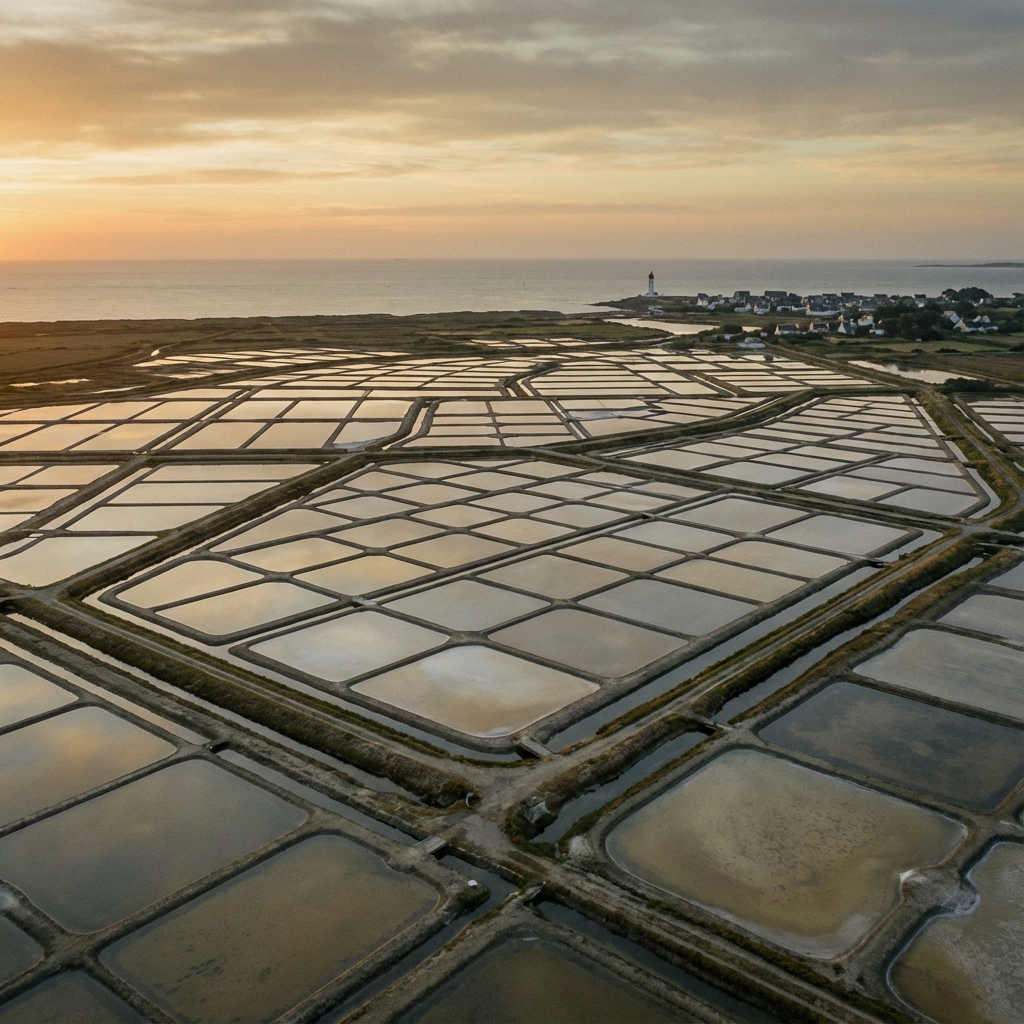
"Born of the Atlantic, sculpted by the wind."
The salt marshes of Guérande have remained unchanged since the ninth century. Here, where the Loire meets the Atlantic, Celtic monks first carved the clay basins that trap the sea and let the sun do its ancient work.
Each crystal that forms on the surface of our marshes carries the mineral signature of this specific coastline—the granite bedrock, the oceanic currents, the particular ratio of magnesium to sodium that exists nowhere else on earth.
We do not manufacture salt. We wait for it. And when it arrives, we collect it by hand, exactly as it has been done for eleven centuries.
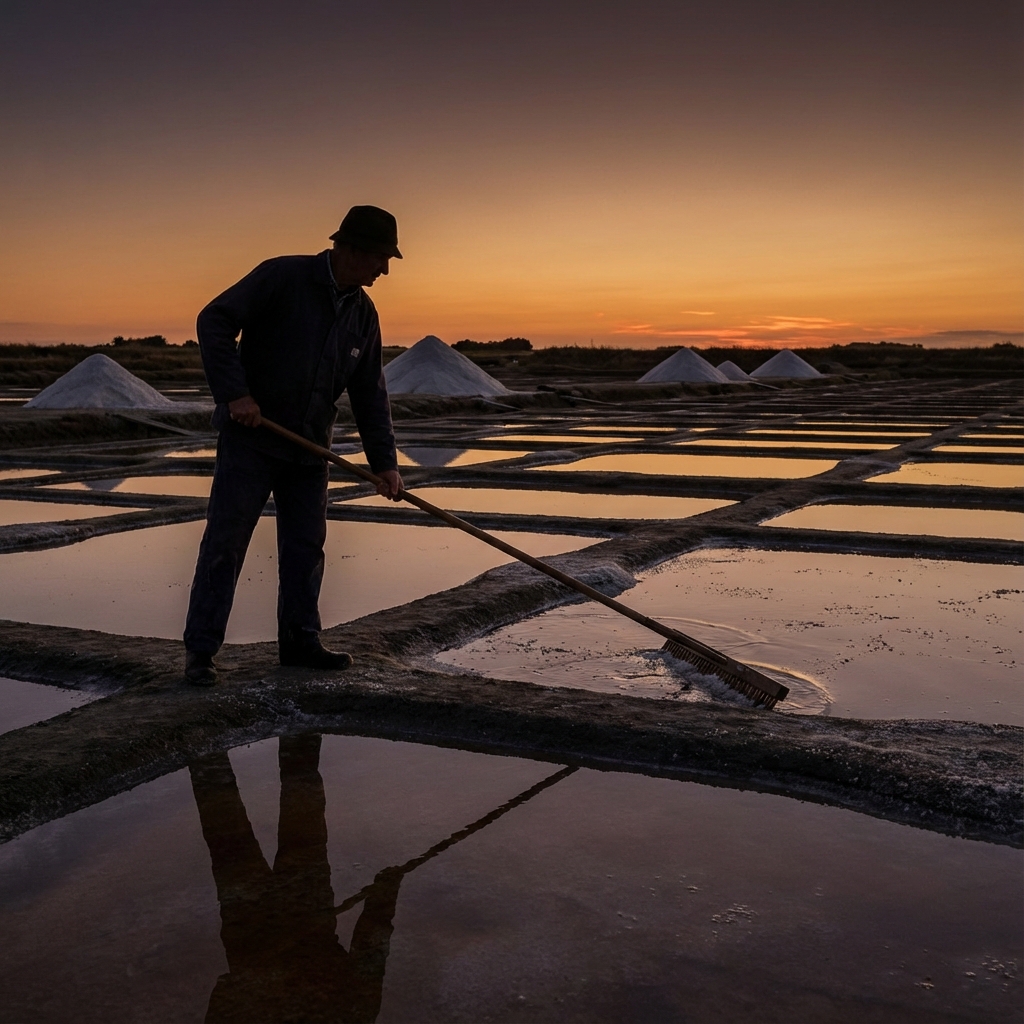
The paludier works in silence, reading the water as one reads weather. When the salinity reaches 260 grams per litre and the wind blows from the east, the crystals begin to form.
The lousse—a wide wooden rake with no metal parts—glides across the clay bed, gathering the grey salt with a motion perfected across forty generations. No machines. No shortcuts. Only the patience of skilled hands.
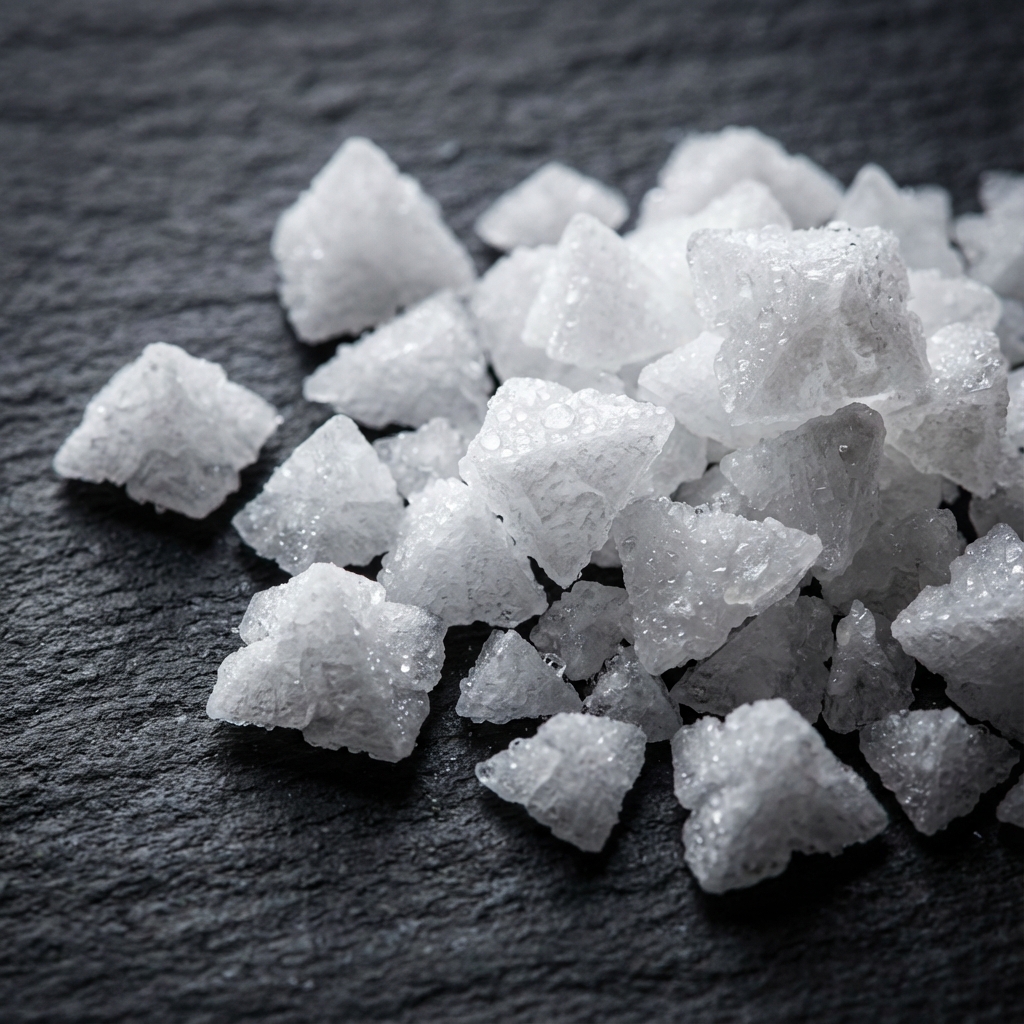
Fleur de Sel forms only under precise conditions: a hot afternoon sun, a dry easterly breeze, and absolute stillness in the water. When these elements align, delicate crystals bloom on the surface like frost on a winter window.
These crystals are gathered by the lousse à fleur—a tool even more delicate than the standard rake—and must be collected within hours before they sink and become grey salt.
The yield varies wildly. Some summers produce abundance; others, scarcity. This unpredictability is not a flaw. It is the signature of a product governed by nature, not industry.
Unlike industrial salt—stripped of its trace elements through chemical processing—our Fleur de Sel retains the full mineral spectrum of the Atlantic. The result is a salt that tastes of the sea, not of sodium alone.
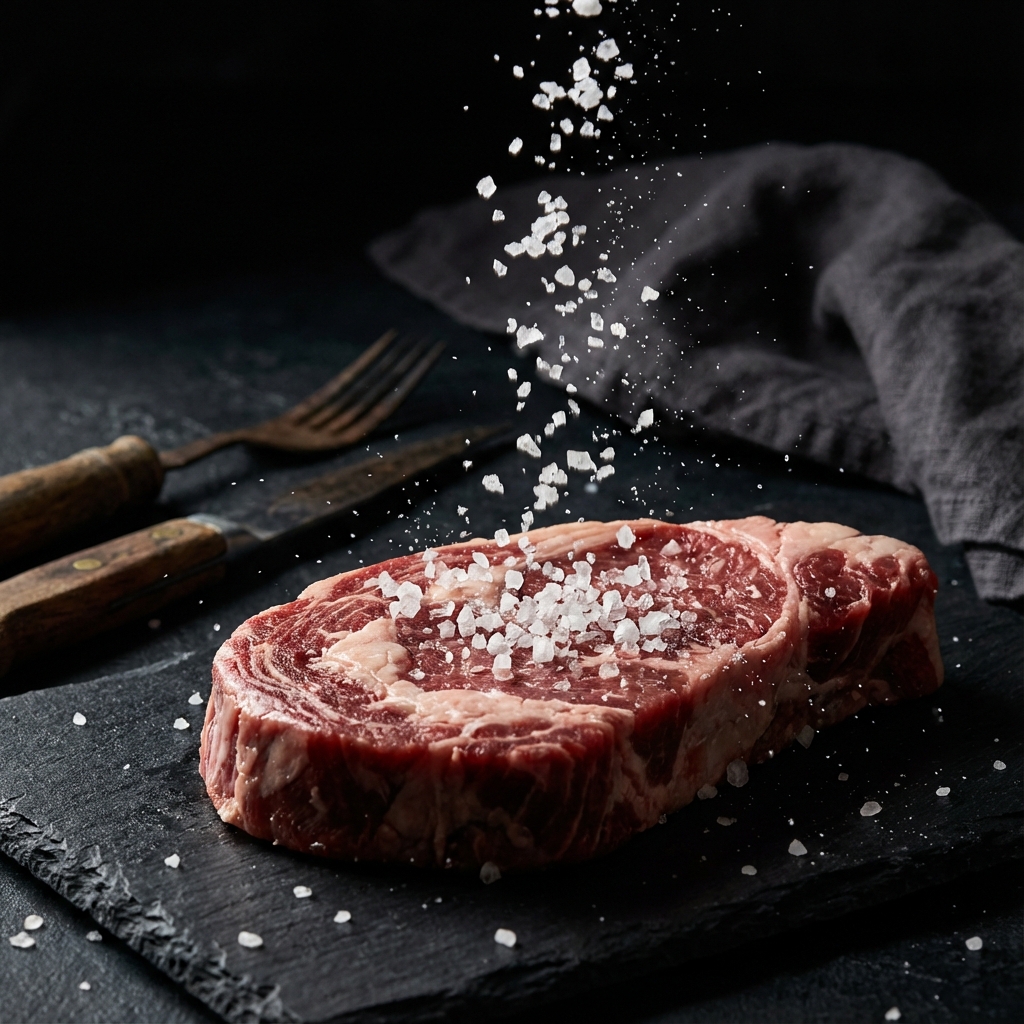
Fleur de Sel is not a cooking salt. Heat destroys its delicate crystal structure and evaporates the moisture that gives it complexity. It is applied at the final moment—a flourish, not an ingredient.
The crystals dissolve slowly on the tongue, releasing a wave of mineral flavour that industrial salt cannot replicate. Professional kitchens prize it for this controlled release: the first bite of salt, followed by the deeper notes of magnesium and sea.
Our packaging house stands 200 metres from the marshes. The structure—timber frame, linen insulation, and clay-rendered walls—is designed to maintain consistent humidity. Salt absorbs moisture from the air; our environment is calibrated to preserve the crystal texture from harvest to dispatch.
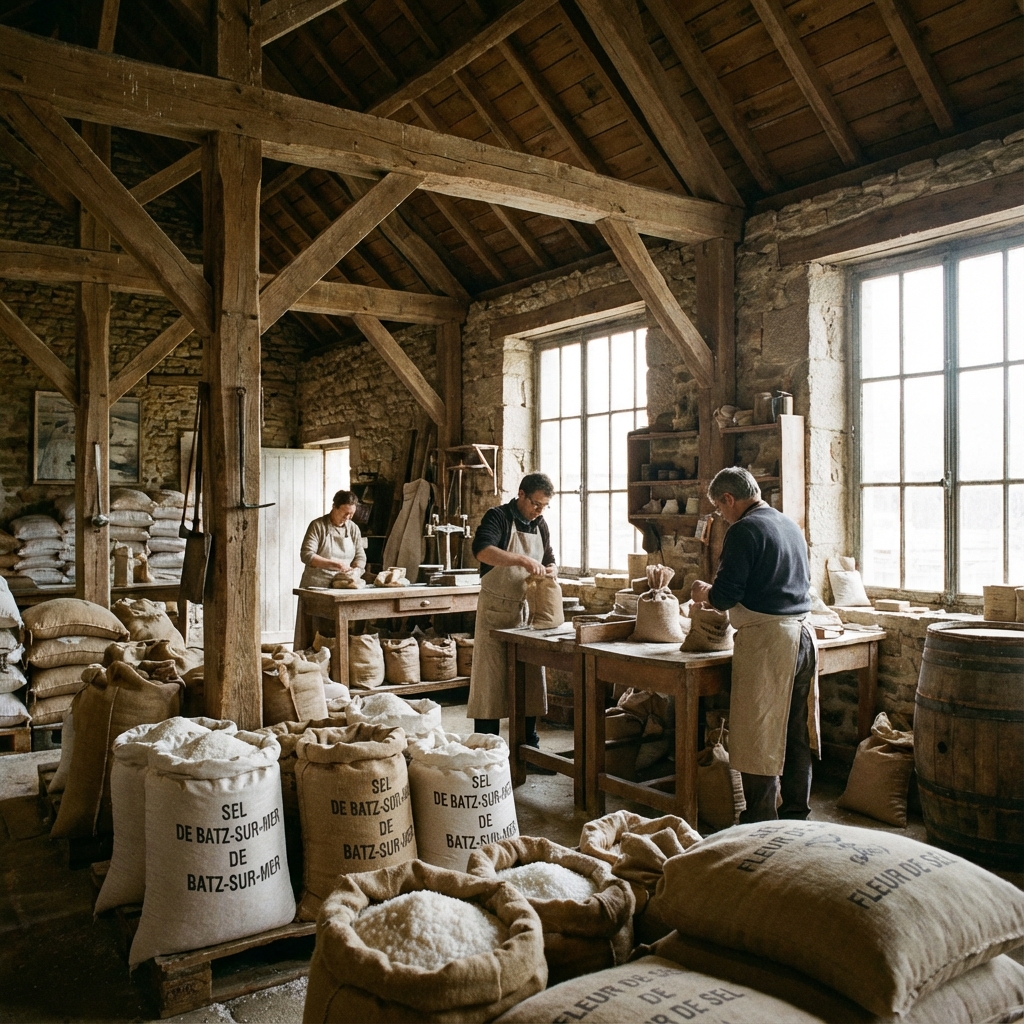
Restored from an 18th-century grain store. Traditional materials. Zero climate control machinery.
Salt harvesting is not a year-round operation. It is a summer art, dependent entirely on the absence of rain and the presence of a specific combination of heat and easterly wind. The calendar below shows how our year unfolds.
Marsh beds are drained, cleaned, and the clay is repaired from winter damage.
Water is reintroduced. The first Fleur de Sel crystals form if conditions permit.
Daily harvesting. Maximum evaporation. The finest crystals of the year emerge.
Cooling temperatures signal the end. Water is drained before autumn rains.
The marshes rest under winter rain. Salt is packaged and dispatched from storage.
We supply restaurants, specialty retailers, and private collectors. Due to the limited nature of our harvest, allocation requests are reviewed monthly by our cellar master.
Your request has been received. Our cellar master will respond within 48 hours.
Our salt is harvested exclusively from the protected marshland between Batz-sur-Mer and Guérande—a UNESCO-recognized wetland of exceptional biodiversity.